Cut First-Response Time on WhatsApp: The AI Playbook
WhatsApp response time decides whether the customer stays or leaves. See why the first reply matters so much and how AI drops it to seconds, 24 hours a day.
SquadOS Team · June 8, 2026 · 7 min read
On WhatsApp, the math is brutal: the customer sends a message and starts counting the minutes. Every minute without a reply is a chance for them to cool off, check the competitor, or simply give up. In chat, patience runs short. What used to be “I’ll reply tomorrow” on email becomes “why hasn’t anyone answered me yet?” on WhatsApp.
First-response time is the metric that moves this the most, and it’s where AI makes the biggest leap. This guide covers what first-response time is, why it decides sales and retention on WhatsApp, and the step-by-step to drop that number to seconds with AI, without losing quality or the human touch where it matters.
What first-response time is (and why it rules)
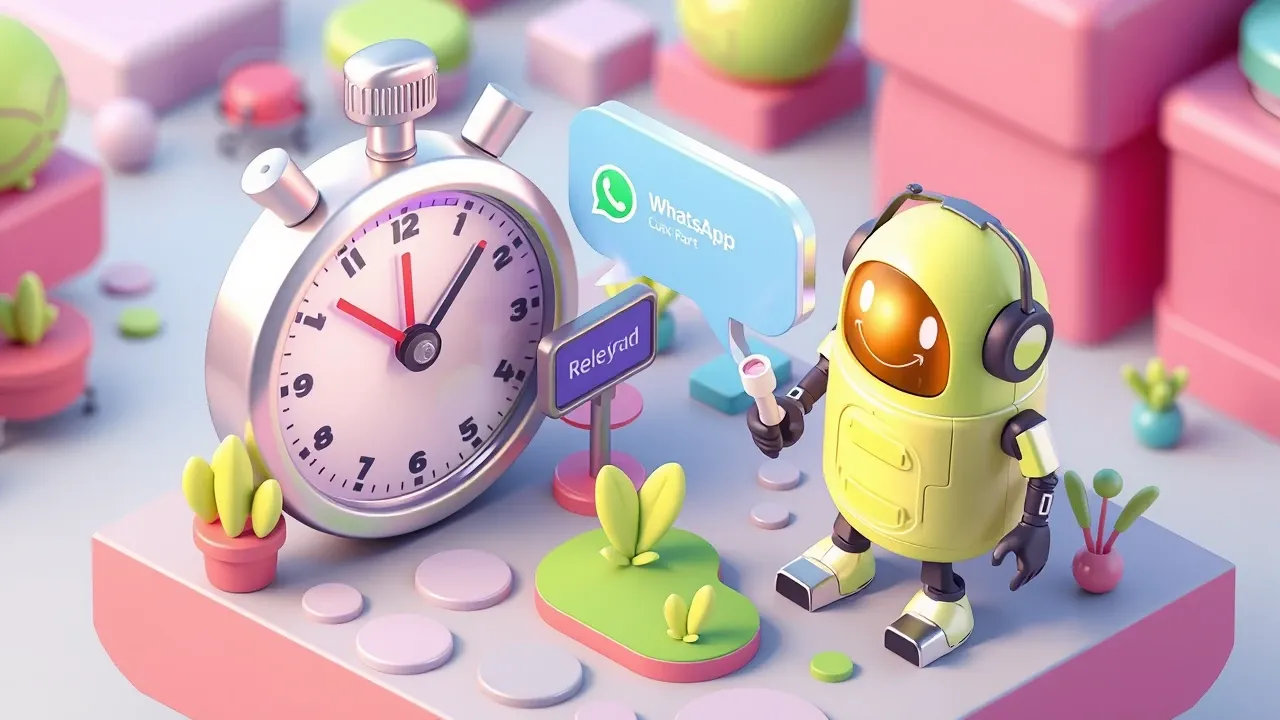
First-response time is how long the customer waits between sending a message and getting the first real reply. It’s not the time to solve everything, it’s the time until the company shows the first sign of life. And that first sign is what decides whether the customer stays or vanishes.
The reason is behavioral. On WhatsApp, the customer is used to instant conversation: they talk to friends and family and get a reply in seconds. When they message a company, the expectation is similar. Ten minutes of silence is already too much. Half an hour, and they’re looking at the competitor. An hour, and they’re gone.
The first reply matters for three concrete reasons:
- It holds attention. Replying fast catches the moment the customer is engaged and willing to talk. Wait, and they cool off.
- It sells more. In sales, the lead that gets a reply in the first few minutes converts far more than the one that waits hours. Speed is money.
- It builds trust. A fast reply signals an organized, present company. A slow one signals the opposite, before support has even started.
The detail many forget: the first reply doesn’t have to solve the whole problem. It has to show someone’s there, understand what the person wants, and give the next step. It’s the “I’ve got you” that keeps the customer from vanishing while the case moves.
Why human-only support can’t keep up with the speed

Human-only support can’t sustain fast replies because WhatsApp demand respects neither schedule nor volume. Messages come in spikes, after hours, all at once, and the human team handles one at a time. The math doesn’t close.
The problem isn’t a bad team. It’s the nature of the channel. Three things conspire against human speed:
- The spikes. Messages don’t arrive evenly spaced. They come in bursts at lunchtime, end of day, after a post. The queue explodes and response time spikes with it.
- After hours. A big share of messages arrive at night, on weekends, on holidays. With no on-call, they sit until the team returns, and the customer has already waited twelve hours.
- Parallelism. One agent handles only a few conversations at once well. Double the volume, and you either double the team or double the wait. No magic.
The old fix was hiring more people, but that just pushes the problem and blows up the cost. Every new channel, every campaign spike, every bit of growth demands another agent. And even with a big team, the small hours stay uncovered. The speed customers expect on WhatsApp simply doesn’t fit a 100% human model.
How AI drops response time to seconds
AI drops first-response time to seconds because it replies the instant the message arrives, at any hour, across as many conversations as come in at once. The agent has no queue, no shift, and no parallelism limit. The first reply stops depending on someone being free.
The gain comes from three fronts that hit the human bottlenecks head on:
- Immediate reply, always. The message arrives, the agent reads it and replies right away, whether it’s noon or three in the morning. The customer never sits in the void waiting for someone to show up.
- Infinite parallelism. A hundred customers messaging at the same time get a reply at the same time. The spike that would sink the human team, the agent absorbs without breaking a sweat.
- First layer resolved. A big share of messages are repeat questions the agent already answers on its own. The case that needs a person reaches the human with context attached, and the human queue stays short.
But speed without quality backfires. Replying fast and wrong is worse than being slow. That’s why AI needs two things underneath:
- A good knowledge base. The fast reply has to be right. The agent pulls from the company’s knowledge, it doesn’t guess. A bad base is what makes AI answer fast and wrong.
- Clean escalation. When a case goes beyond what the AI solves, it hands off to a human right away, with the history attached. Speed on the first reply, people on what needs people.
The result is the best of both worlds: the customer gets a reply in seconds, at any hour, and the human team steps in only where it adds value. First-response time plummets without you doubling the team.
Step-by-step to roll it out on your WhatsApp
You roll out fast replies on WhatsApp by putting an AI agent on the first layer, connecting the number, and uploading the knowledge base, with guardrails and escalation configured. On a platform with a native WhatsApp channel, that’s configuration, not an integration project.
The practical path, in steps:
- Connect WhatsApp. On a platform with a native channel, linking the number is configuration. Without it, you fall into the hell of wiring the WhatsApp API by hand.
- Upload the knowledge base. FAQ, deadlines, policies, catalog. This is where the fast, correct reply comes from. The better the base, the more the agent solves on its own on the first message.
- Define what the agent answers and what escalates. Make the scope clear: what it resolves on the spot and when it calls a person. The first reply is the agent’s; the complex case is the team’s.
- Turn on the guardrails. Anti-hallucination so it doesn’t invent a deadline or policy under pressure, PII protection, brand tone of voice locked even when replying in seconds.
- Track response time. Measure before and after. First-response time is the metric that drops the most out of the gate, and you can watch the agent holding the spikes that used to crush the queue.
The surprising part: whoever understands the support builds the agent, no IT queue. The barrier is no longer technical. The work became defining well how WhatsApp should reply, and the AI takes on the speed the customer expects.
Want to reply on WhatsApp in seconds, at any hour? On SquadOS you build the external agent in AgentMaker, connect WhatsApp as a native channel, upload your knowledge base, and turn on the anti-hallucination, PII, and tone-of-voice guardrails. The agent gives the first reply on the spot, holds the spikes on its own, and escalates to your team only what needs a person.